


One Game, Many Possibilities

Supporting Development Through Everyday Play
This blog includes access to a free Connect 4 activity download
Amid Busy Days, Make Room for Play
The new school year is now in full swing. Mornings begin quickly. Afternoons fill with homework, activities, appointments, and the many small routines that keep family life moving.
In the middle of it all, play can easily become one more thing we mean to make time for.
But play does not have to require a large block of time or a carefully planned activity. It can happen while waiting for dinner, during a break from homework, between activities, or when a familiar game finds its way to the table.
A game may look like “just play,” but there is often much more happening underneath it. A board game gives children opportunities to count, wait, plan, and take turns. Play dough can support hand strength and coordination. Jumping rope challenges balance, timing, rhythm, and endurance.
Within play, children communicate ideas, solve problems, respond when something does not go as expected, and try new challenges that build on skills they already have. Perhaps most importantly, when they are genuinely engaged, the effort may not feel like work. Play serves us in so many ways!
When choosing toys and activities, consider the ones that hide development and learning inside genuine fun. The goal is not to turn every playful moment into therapy or another lesson.
Instead, we can notice how certain toys and interactions invite children to move, think, communicate, problem-solve, coordinate their hands, or connect with another person. The practice is still there, but the fun helps disguise the effort.
This is one of the things I love about occupational therapy. We use meaningful activities—including play—to build on what a child already knows, enjoys, and does well. Parents and caregivers support the process by adding essential knowledge about their child, which is why partnership throughout the therapy process matters so much.
More Than Information: Supportive Resources Designed for Real Life
Developmental ideas are everywhere. But having more information does not always make it easier to know what may help your child, where to begin, or how to fit a strategy into an already full day. All of
Nurture by Design's resources are created with those real-life questions in mind. Whether it's one of my free blog handouts or one of my caregiver support guides, all of them provide practical information and ideas to help you identify a strategy to try today. They are designed to help families understand not only what to try, but why an idea may help, what to notice, and how to adapt it for their child and daily routines. Check out this month's free resource below!
Rather than offering another checklist, each resource will include context to help you understand and apply the ideas more thoughtfully.
Practical Strategies with Every Blog
Nurture by Design's blog posts will include free practical ideas to try at home, at school, during therapy, or in the community. As the collection grows, you will find resources for caregivers, clinicians, and some designed to support both. Subscribe to collect resources and ideas to explore at your own pace, beginning with what feels most helpful right now.
This Month’s Free Resource
This month, I’m introducing the first resource in the Everyday Development Series: Travel Connect 4: 20+ Ways To Build Development Through Play.
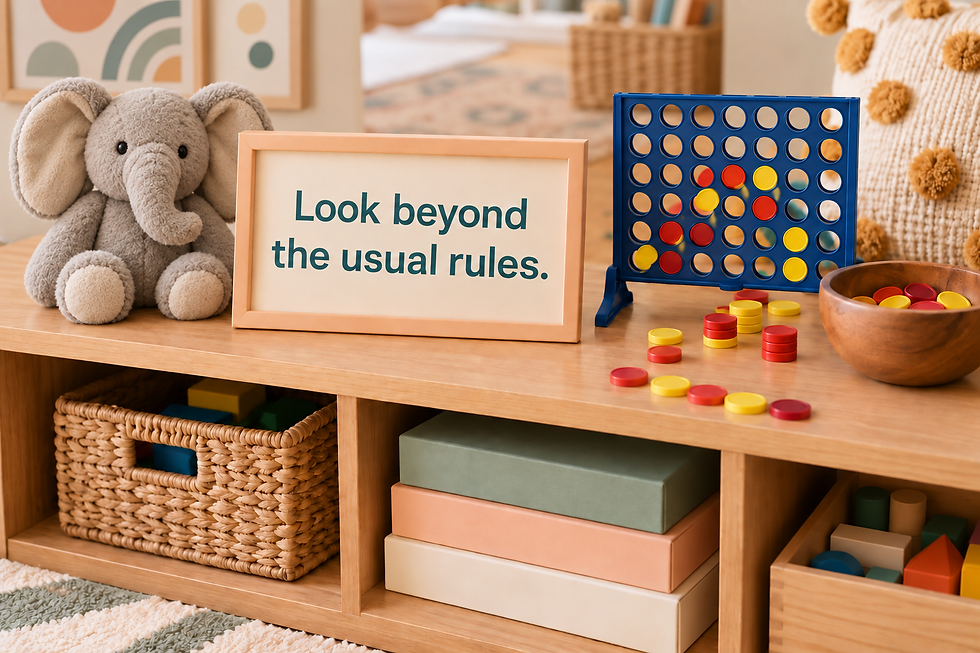
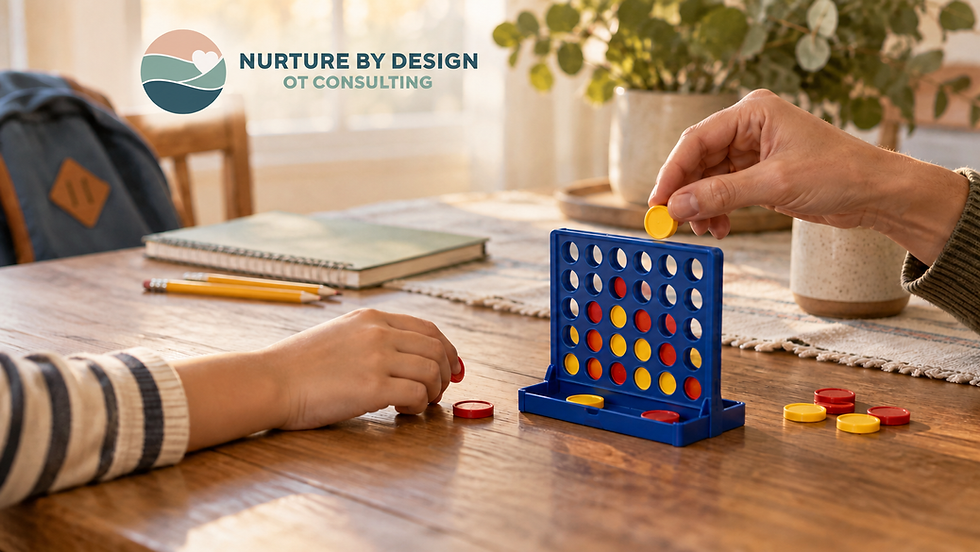
Years ago, I found my first travel-size Connect 4 at a discount store. At the time, it seemed like a fun way to support pincer grasp development and perhaps a few visual-motor skills. I had no idea how versatile it would become. Now it is one of the first things I reach for when packing my therapy bag.
To this day, I keep one in the clinic and one ready to go. I’ve replaced at least one over the years, but I am always impressed by how well this little game survives all the extra playtime it gets—and how much can be done with it.
For children who could safely use the small pieces, most were willing—if not excited—to engage with the game. It was easy to adapt and offered a quick way to observe a variety of skills. Within a few minutes of playing, I might begin noticing:
Grasp, release, and coordination with a small object
Hand preference, postural stability, and preferred playing positions
Visual-motor coordination, scanning, and visual-perceptual skills
Attention, response time, motor planning, and problem-solving
Frustration tolerance and responses to mistakes
Communication, turn-taking, connection, and responses to others
These observations, of course, do not replace a comprehensive occupational therapy evaluation. They can, however, help a therapist notice patterns, ask better questions, and determine which skill areas may need further exploration. For families, the game offers playful ways to support skills children use every day.
Connect 4 became a favorite because I could support different goals without abandoning the child’s interest. The same familiar game could start as a fine-motor activity, and easily transition into a movement experience, or a problem-solving opportunity with a few simple adaptations.
Today, I’m excited to share some of these playful strategies with you so they can be part of everyday life—not only something that happens during therapy. The free resource offers more than 20 ideas for families and therapists supporting school-age children, with or without a diagnosis.
Start with an idea that fits, notice the child’s response, and let the play unfold from there.
Sometimes setting aside the usual game rules is where the most creative—and useful—play begins.
Continue Exploring
Understanding Behavior as Communication: Explore what your child’s gestures, actions, and responses may communicate during play, transitions, and daily routines.
Play Foundations Cards: Create simple opportunities for connection while your child develops shared-play and game skills.
Parent Guidance Session — “Ask an OT”: Get individualized guidance for adapting these ideas or understanding what you notice during play.
Make Room for One Playful Moment
There’s no need to use every idea or add another complicated activity to an already full day. My goal is to create a collection of curated resources for you to choose from.
Start with a familiar game, playful idea, or silly moment that fits your child, your family, and the moment in front of you.
Life happens in the moments while dinner is cooking, interactions between homework assignments, exploration during therapy sessions, and possibly in a few unhurried minutes at the end of the day.
Nurture By Design resources are designed to share options that may fit into a busy day and highlight how much time there can be for connection, participation, and developmental possibility.

Comments